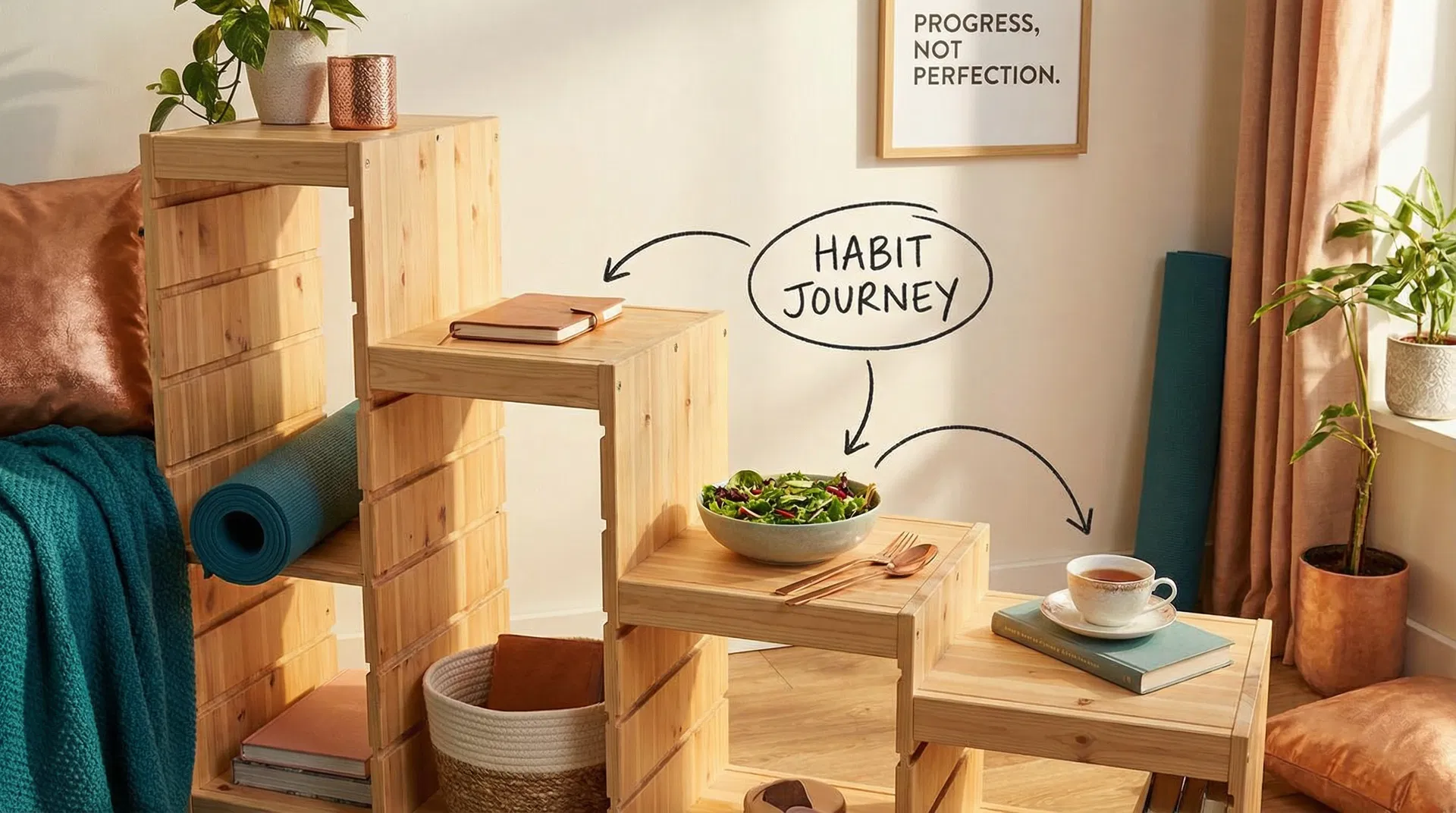
The Role of Building New Habits
"You cannot simply remove an old habit; you must replace it with a new one. This is how lasting change happens—not through willpower alone, but through building new neural pathways."
Addiction is fundamentally a habit disorder. Your brain has learned to respond to certain cues (stress, boredom, social situations, certain places) by seeking and using substances. This neural pathway has been reinforced thousands of times, making it automatic and powerful. Recovery requires building new habits—new neural pathways—that respond to the same cues in healthier ways.
The habit loop consists of three parts: the cue (or trigger), the routine (or behavior), and the reward. For example, the cue might be stress at work, the routine might be using a substance, and the reward might be temporary relief or euphoria. To change a habit, you do not eliminate the cue or the reward; instead, you change the routine. The cue remains (stress at work), the reward remains (you still need relief), but the routine changes (instead of using, you go for a run, call a friend, or practice meditation).
Building new habits takes time and repetition. Research suggests that it takes an average of 66 days for a new behavior to become automatic, though this varies depending on the complexity of the habit and the individual. This means that in early recovery, you need to consciously choose healthier behaviors repeatedly until they become automatic.
One effective strategy for building new habits is to attach them to existing habits or cues. For example, if you always have coffee in the morning, you could attach a new habit to that: after coffee, you journal for five minutes. If you always walk past a certain location where you used to use, you could attach a new habit: when you pass that location, you call your sponsor or support person. These "habit stacking" techniques make it easier to remember and implement new behaviors.
Starting small is crucial when building new habits. Instead of trying to completely overhaul your life, pick one or two small habits to focus on. Maybe it is taking a ten-minute walk every morning, or drinking a glass of water when you wake up, or spending five minutes journaling before bed. Small, consistent actions create momentum and build confidence.
Accountability and tracking can be powerful tools for building new habits. This might mean telling a friend about your new habit, joining a group that focuses on the habit, or using an app to track your progress. Seeing a visual record of your consistency can be motivating and help you stay on track.
It is important to expect setbacks. There will be days when you do not follow through on your new habit. This is normal and does not mean you have failed. The key is to get back on track the next day without judgment or self-criticism. Research shows that people who are able to bounce back from missed days are more successful at building lasting habits than those who give up after a single lapse.
As you build new habits, you are literally rewiring your brain. Each time you choose a healthier response to a cue, you are strengthening new neural pathways and weakening old ones. Over time, the new habit becomes automatic, and you no longer have to consciously choose it. This is how recovery becomes sustainable—not through constant willpower, but through the development of new, automatic responses.
The habits you build in recovery become the foundation of your new life. A morning meditation practice, regular exercise, time with supportive people, engaging in hobbies and interests, contributing to your community—these habits create a life that is so rewarding and fulfilling that the pull toward substances diminishes. This is the power of building new habits: they do not just help you avoid using; they help you build a life worth living.
Ready to Start Your Recovery Journey?
Connect with Christy Day for personalized guidance and support tailored to your unique situation.
Book a Consultation